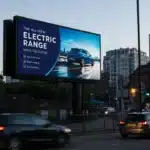
An outdoor LED advertising screen can look straightforward on a drawing. Choose a location, decide on the size and install a bright display that can be seen from a distance.
The reality is usually more involved.
A screen may need to remain readable in direct daylight, cope with changing weather, display content clearly to moving traffic and run for long hours without frequent attention. The structure, power supply, data connection and maintenance route all need to be considered before the display specification is finalised.
For AV integrators, advertising companies and commercial property owners, a reliable outdoor LED display starts with the site rather than the product range.
Define who needs to see the screen
The first question is not how large the display should be. It is who will be looking at it, where they will be standing and how long they will have to read it.
An LED screen facing a pedestrian area works differently from one positioned beside a road. People walking through a shopping centre frontage may have several seconds to take in the message. Drivers passing at speed may only see the display briefly.
This changes the way the screen should be planned.
Useful details include:
- The typical viewing distance
- Whether the audience is walking, standing or travelling in a vehicle
- The direction from which most people approach
- The likely viewing angle
- Whether nearby buildings or street furniture obstruct the sightline
- How the location changes after dark
A large screen is not automatically effective if it sits at the wrong angle or the content cannot be understood quickly enough.
The display position should be assessed from the audience’s point of view, not only from the proposed installation position.
Viewing speed affects the content
Outdoor advertising content needs to work within the time available.
A roadside display may need a simple message, a recognisable image and a small amount of text. A screen in a pedestrian area can carry more detail, but the content still needs to remain clear from a distance.
Trying to show too much usually reduces the value of the display. Small text, long sentences and complicated layouts may look fine on a design monitor but become difficult to read once they are viewed outdoors.
The content team should know:
- The screen’s physical dimensions
- Its final pixel resolution
- The main viewing distance
- The expected viewing time
- Any restrictions on movement or animation
- The required scheduling format
Content testing should be carried out at the real viewing distance where possible. What looks bold at a desk can feel surprisingly small on site.
Pixel pitch should follow the viewing distance
Outdoor advertising screens are often viewed from further away than indoor displays, which means the finest available pixel pitch may not be necessary.
A larger pitch can still provide a clean image when the audience is positioned at an appropriate distance. Specifying a finer pitch than the site requires can increase cost without producing a meaningful improvement for the viewer.
The decision should be based on the closest realistic viewing position and the type of content being shown.
A screen carrying large advertising graphics can tolerate a different pitch from one that must display prices, travel information or detailed text. The overall screen dimensions also affect the usable resolution, so pitch and size should be considered together.
The aim is not to achieve the highest possible pixel density. It is to provide enough detail for the content to remain clear from the intended viewing area.
Daylight visibility needs careful control
Outdoor LED displays need sufficient brightness to remain visible in daylight, but the highest brightness figure should not be treated as the only measure of suitability.
The screen may face direct sunlight during part of the day and shade during another. It may also sit near reflective glass, pale building surfaces or existing illuminated signs.
A display that performs well at midday may become unnecessarily intense after dark if the brightness is not managed properly.
Automatic or scheduled brightness control can help the screen respond to changing conditions. This improves viewing comfort and prevents the display from overpowering its surroundings at night.
The specification should account for:
- The direction the screen faces
- Direct sunlight at different times of day
- Seasonal changes
- Nearby artificial lighting
- Reflections from surrounding buildings
- Daytime and night-time operating levels
Brightness needs to be judged in context. A figure on a datasheet does not show how the display will behave on the proposed site.
Weather protection is only part of the outdoor specification
An outdoor display must be designed for exposure, but weather resistance involves more than choosing sealed LED modules.
Water can reach the system through cable entries, junction points and poorly planned enclosures. Temperature changes may affect power equipment and processing hardware even when the front of the display remains protected.
The full installation needs to account for:
- Rain and wind-driven moisture
- Temperature variation
- Condensation
- Drainage
- Ventilation
- Cable entry points
- Corrosion risks
- Access during poor weather
Covered locations should not automatically be treated as indoor environments. A screen beneath a canopy may still be exposed to wind, damp air and rain entering from the side.
The safest approach is to specify around the harshest conditions the installation is likely to face.
The supporting structure needs early input
The LED display cannot be considered separately from the structure holding it.
Large outdoor walls create weight and wind-loading considerations that affect the supporting steelwork, foundations and fixing points. The cabinet layout must match the proposed structure, and service access needs to be included without weakening the overall design.
Structural requirements should be reviewed before the LED configuration is signed off. Changing the cabinet count or screen dimensions later can affect the weight, mounting points and wind area.
The planning team should confirm:
- Whether the screen will be wall-mounted or freestanding
- The condition of the supporting building or structure
- The proposed fixing method
- Space for cabling and power distribution
- Access behind or in front of the display
- How technicians will reach the screen safely
- Whether lifting equipment will be needed
A clean visual design on the front of the display depends on practical decisions being resolved behind it.
Maintenance access should not be left until the end
Outdoor advertising screens are often installed in prominent but difficult-to-reach positions.
That can make even a straightforward module replacement expensive if access equipment, road restrictions or specialist lifting arrangements are needed every time the display is serviced.
Front or rear maintenance should be chosen around the site.
A rear-serviceable screen needs enough space for a technician to work safely behind the cabinets. A front-serviceable system still needs a clear route to the display face and enough room to remove modules without damaging surrounding finishes.
It is also worth considering how maintenance will affect the area around the screen. A display above a shop entrance, public walkway or busy road may require work to be planned outside normal operating hours.
These costs and restrictions should be understood before installation. Maintenance access that looks acceptable on a drawing may be much less practical once the surrounding space is in use.
Power requirements need more than a nearby supply
The electrical design should be based on the proposed wall configuration, operating brightness and expected content.
Maximum consumption figures are important for sizing the supply, while typical operating figures help with long-term energy planning. Power distribution across the cabinets also needs to be arranged so that faults can be isolated and diagnosed without unnecessarily shutting down the complete display.
For advertising applications, power resilience may be important. A failure during a paid campaign can affect more than the appearance of the screen.
Depending on the project, the design may need to consider:
- Separate power circuits
- Surge protection
- Safe isolation
- Power monitoring
- Backup arrangements
- Controlled restart after an outage
- Access to distribution equipment
Electrical hardware should be positioned where it remains protected but can still be reached for inspection and maintenance.
Content delivery and remote control need a reliable connection
An advertising screen is only useful if content can be updated when required.
Some displays run a fixed schedule that changes occasionally. Others may need regular campaign updates, live information or different content throughout the day.
The control setup should reflect who manages the screen and how quickly changes need to be made.
A permanent outdoor display may benefit from:
- Remote content scheduling
- Secure network access
- Screen status monitoring
- Alerts when components fail
- Remote brightness adjustment
- Playback confirmation
- Controlled access for different users
The data connection also needs a fallback plan. If the network drops, the display should not simply show an error message or blank screen. Local content storage can allow the schedule to continue until the connection is restored.
Responsibility for software, connectivity and content approval should be agreed before handover.
Consider what happens when part of the screen fails
A single failed module on a large outdoor display can be highly visible, particularly when the screen is showing flat colours or branded backgrounds.
The project should include a realistic spares plan. This may cover LED modules, receiving cards, power supplies and other components that can be replaced on site.
Keeping compatible parts matters because replacement modules from a different production batch may not immediately match the brightness or colour of the existing wall. Calibration and module records can make future replacements easier to manage.
The required response time should also be agreed.
A screen used for occasional site information may tolerate a different maintenance arrangement from a display carrying paid commercial campaigns every day. The level of support should reflect the operational and commercial impact of downtime.
Advertising schedules affect how the display is specified
A screen that operates for a few hours each evening has different demands from one running from early morning until late at night.
Long operating hours place greater importance on heat management, component quality and planned maintenance. They also affect electricity consumption and the rate at which brightness may change over time.
The likely operating pattern should be included in the brief, along with:
- Daily running hours
- Whether the display operates seven days a week
- Seasonal schedules
- Night-time brightness requirements
- Expected campaign changes
- Periods when maintenance can be carried out
These details help the supplier and integration team recommend a system that is supportable over the expected working life of the display.
The surrounding environment can affect image quality
The display does not operate in isolation.
Nearby signs, lighting columns, trees, glass buildings and street lighting can all affect visibility. The screen may also need to be read from several positions rather than one central viewpoint.
Wide viewing performance can be important where people approach from different directions. Colour and brightness should remain consistent enough that the message does not change noticeably when seen from an angle.
Physical surroundings can also affect maintenance. Trees may obstruct lifting equipment, while public areas may limit when technicians can work. These issues are easier to solve during planning than after the display is installed.
A site survey should therefore consider both visual performance and the practical operation of the screen.
Build the brief around the site
A useful outdoor LED advertising brief should include more than an approximate screen size.
The project team should provide:
- Site photographs and measurements
- Proposed screen position
- Typical and closest viewing distances
- Audience direction and movement
- Daylight exposure
- Required operating hours
- Content types and source resolutions
- Mounting and structural information
- Service access
- Power and data availability
- Expected support response
- Required installation timeline
This gives the LED supplier and integration partners enough information to recommend the screen, processing and support approach as one complete system.
PixelLogic Solutions supplies and supports Uniview LED display systems for professional projects, working with AV integrators, installers and commercial partners during specification and delivery. For outdoor advertising applications, early technical guidance helps ensure the proposed display is visible, maintainable and suited to the conditions it will face once it is operating.
FAQs About Outdoor LED Advertising Displays
-
How long does an outdoor LED advertising display typically last?
The working life depends on the product, operating hours, brightness settings, environmental conditions and maintenance. Individual modules, power supplies or control components may need replacing during the life of the screen, even when the main cabinet structure remains serviceable.
-
Does an outdoor LED screen need advertisement consent?
Consent requirements depend on the location, screen size, brightness, content and local authority rules. The project team should confirm the position with the relevant planning authority before ordering the display or beginning structural work.
-
Can an existing billboard structure support an LED display?
Possibly, but the structure must be assessed by a suitably qualified professional. An LED display introduces different weight, wind loading, power and maintenance requirements from printed advertising, so an existing frame should not be assumed to be suitable without inspection.
-
How often should an outdoor LED display be cleaned?
Cleaning frequency depends on the location. Screens near busy roads, industrial areas, coastal sites or trees may collect dirt more quickly. Regular visual inspections and cleaning can help maintain image quality, airflow and drainage without waiting for contamination to become obvious.
-
Can different advertisers share the same LED screen?
Yes. A content management system can schedule different campaigns by time, date or frequency. Clear access controls and approval procedures are useful where several advertisers, agencies or site operators are responsible for supplying content.
-
Can an outdoor LED display show live information?
An appropriate control system can display live data such as transport updates, event information, pricing or public messages. The data source and network connection must be reliable, and fallback content should be available if the live feed stops working.
-
What should be checked before an outdoor LED screen is handed over?
Commissioning should confirm image quality, brightness control, content playback, remote access, weather sealing, power distribution and fault reporting. The operator should also receive system documentation, user training, spare parts information and clear support contacts.rs.